
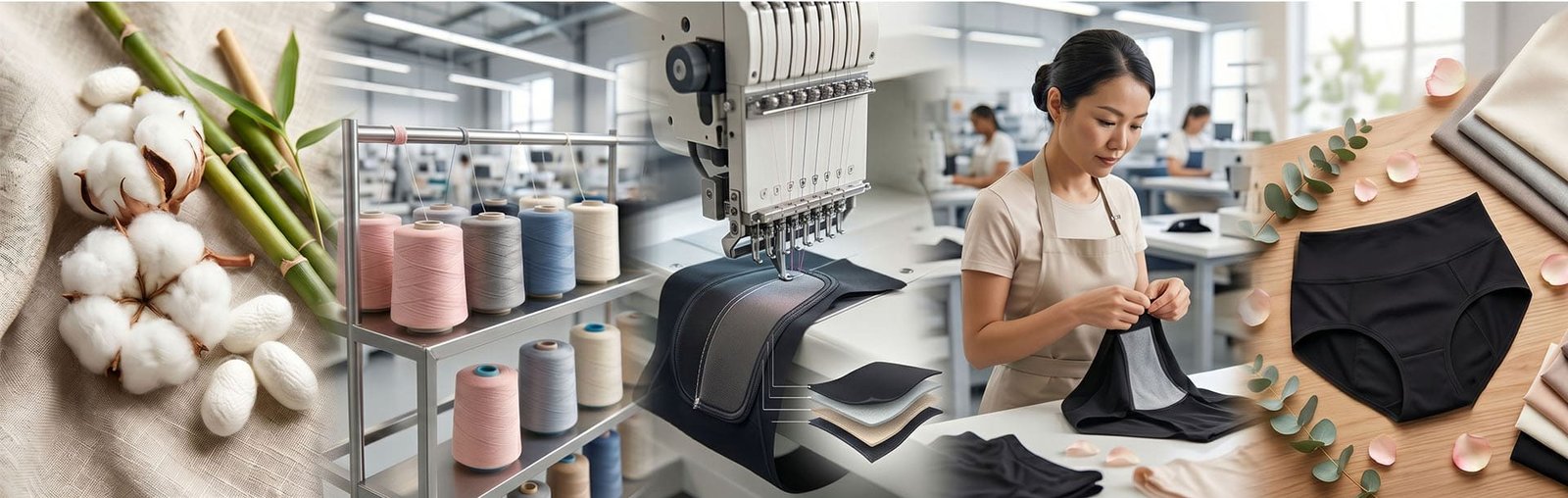
Many people on Reddit complain that one pair of period underwear costs $30. As a manufacturer, hearing this makes me uncomfortable. People might think brands are pocketing huge profits, but the real cost of breathable, leak-proof, multi-layer fabric is high.
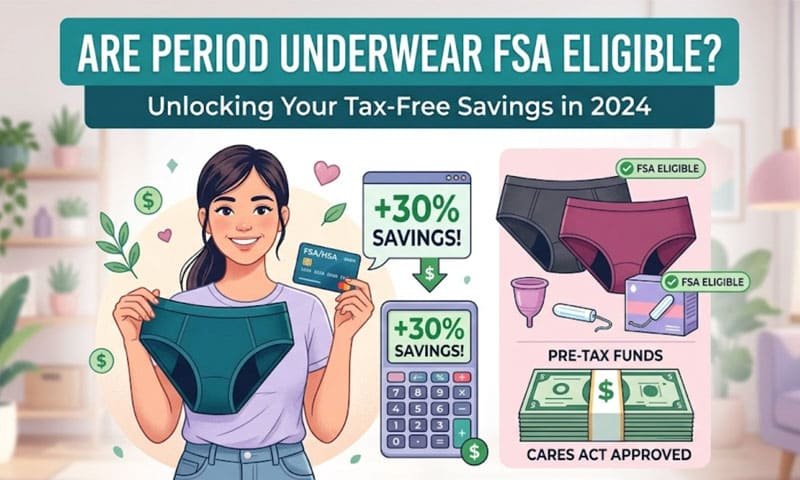
Yes, period underwear is FSA and HSA eligible in the United States. The 2020 CARES Act officially classified menstrual care products, including period underwear, as qualified medical expenses. This means you can use pre-tax dollars to buy them, saving roughly 30% to 40% on your actual out-of-pocket cost.
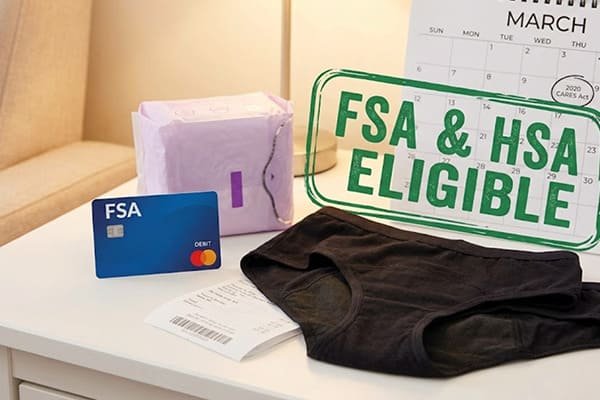
I still remember the day the CARES Act passed. Our factory orders exploded overnight. Why? Because once buyers could use tax-free money, demand for premium period underwear skyrocketed. Let me walk you through what this really means for you, for brands, and for us as the maker behind the scenes.
Why Did the CARES Act Change Period Underwear Forever?
A lot of consumers still don't know this rule exists. They keep paying full price with after-tax money. That hurts their wallet, and it hurts brand growth too.
The CARES Act, passed in March 2020, added menstrual products to the list of IRS-approved medical expenses. Before this law, tampons and pads were taxed as "luxury" items. After 2020, period underwear became FSA1/HSA2 eligible, finally treated as basic healthcare.
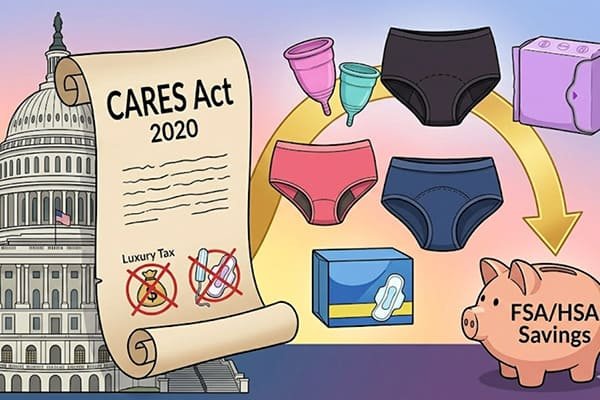
This shift was massive for us on the manufacturing side. When the IRS approved menstrual products, our order book grew fast. Brands rushed to relabel packaging, update their websites, and add the "FSA Eligible" badge. Below is a quick view of how the rule works.
What Counts as FSA Eligible Now?
| Product Type | FSA/HSA Eligible? | Notes |
|---|---|---|
| Period Underwear | ✅ Yes | Reusable, multi-use approved |
| Tampons & Pads | ✅ Yes | All brands covered |
| Menstrual Cups | ✅ Yes | Reusable category |
| Period Swimwear | ✅ Yes | If marketed for menstrual care |
| Regular Underwear | ❌ No | Must have absorbent core |
The key word is "menstrual care function3." If the product is engineered with absorbent layers and leak protection, it qualifies. Regular underwear, even if it's seamless or comfy, does not.
Why Does Period Underwear Cost $30 a Pair?
I hear this complaint all the time. People feel ripped off. They think brands are greedy. But the real story sits inside our factory.
One pair of period underwear costs $30 because of the 4-layer engineered fabric, advanced TPU lamination, antibacterial treatment, and strict needle-detection process. Raw materials alone can hit $6 to $9 per pair before shipping, marketing, and retail markup.
Let me break down the actual cost stack so you can see where every dollar goes. This is what we deal with on the production floor every day.
The True Cost Breakdown
| Cost Item | Approx. % of Retail | Detail |
|---|---|---|
| Raw Materials | 20-30% | 4-layer fabric, TPU film |
| Labor & Sewing | 10-15% | Multi-layer stitching is slow |
| Testing & Compliance | 5-8% | PFAS-free4, OEKO-TEX certs5 |
| Brand Marketing | 25-35% | Influencers, ads, packaging |
| Retail Margin | 20-30% | Store or Amazon cut |
The hardest part is the absorbent gusset. We sew four layers together: a moisture-wicking top, a high-density absorbent middle, a TPU leak-proof film, and a soft outer fabric. Each pair needs to pass needle detection. Each batch needs lab tests for chemical safety. That's why the price tag looks high. The FSA benefit was a relief for everyone, customers and makers alike.
How Do You Actually Use FSA Money to Buy Period Underwear?
Many shoppers get confused at checkout. They have an FSA card but don't know if it'll work. Some try and get declined, then give up.
To buy period underwear with FSA funds, use your FSA debit card directly at FSA-approved retailers like Amazon, Target, or the brand's own site. If the card fails, pay out of pocket and submit the receipt to your FSA administrator for reimbursement.
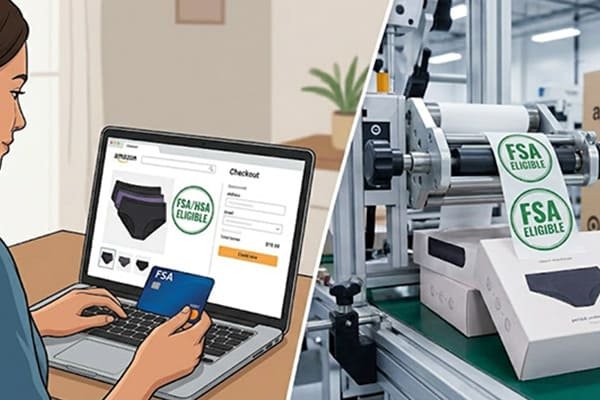
Here's the simple path I always tell our brand clients to share with their customers. It removes friction and boosts conversion.
Step-by-Step FSA Checkout Process
| Step | Action | Tip |
|---|---|---|
| 1 | Check eligibility on FSAstore.com | Search the brand name |
| 2 | Add to cart | Look for "FSA Eligible" badge |
| 3 | Pay with FSA debit card | Or use credit card first |
| 4 | Keep the itemized receipt | Required for audits |
| 5 | Submit for reimbursement | If card was not accepted |
One tip from the factory side: not every brand markets the FSA benefit well. Some brands hide it deep in the FAQ. Smart brands put a giant "FSA/HSA Eligible" badge on the product page. We always advise our OEM clients to do this. It can lift conversion by double digits, no exaggeration.
Does FSA Eligibility Help Brands and Manufacturers Too?
People often ask if this law only helps consumers. The truth is, the whole supply chain wins.
FSA eligibility helps brands grow faster because consumers buy more when they use pre-tax dollars. For manufacturers like us, this means larger order volumes, longer brand partnerships, and more investment into R&D for better absorbent fabric.

This is one of the most underrated parts of the story. When the CARES Act passed, we saw a clear shift in buyer behavior across our B2B clients.
What Changed for the Industry After 2020
| Stakeholder | Before CARES Act | After CARES Act |
|---|---|---|
| Consumer | Paid full price | Saved 30-40% with FSA |
| Brand | Slower growth | Doubled repeat orders |
| Manufacturer | Small test runs | Larger, stable POs |
| Retailer | Limited shelf space | Dedicated period care aisle |
For us, the impact was real. Brands started placing bigger orders. They asked for higher-quality fabric. They wanted PFAS-free certificates, OEKO-TEX papers, and BSCI audits. That pushed us to invest in better machines and stricter QC. So when a customer pays $30 with pre-tax money, that money flows back into making the next generation of period underwear even better. It's a healthy loop, and I'm proud we are part of it.
Conclusion
Period underwear is FSA eligible thanks to the 2020 CARES Act6. Use your pre-tax dollars, save 30-40%, and support better product innovation across the entire supply chain.
"Publication 502 (2025), Medical and Dental Expenses - IRS", https://www.irs.gov/publications/p502. In the United States, flexible spending accounts (FSAs) are tax-advantaged employer-sponsored benefit accounts that allow employees to pay for qualified medical expenses with pre-tax funds, which supports the article’s reference to using an FSA for eligible menstrual care purchases. Evidence role: definition; source type: government. Supports: FSA refers to a flexible spending account that lets consumers use pre-tax dollars to pay for qualified medical expenses.. ↩
"Health Savings Account (HSA) Qualified Medical Expenses", https://www.congress.gov/crs-product/IF12818. Section 3702 of the CARES Act amended the Internal Revenue Code to treat menstrual care products as qualified medical expenses payable from health FSAs and HSAs, supporting the article’s statement that period underwear marketed as a menstrual care product can be purchased with HSA/FSA funds. Evidence role: general_support; source type: government. Supports: Period underwear is FSA and HSA eligible in the United States.. Scope note: Primary legal sources clearly establish eligibility for menstrual care products, but whether a specific item such as period underwear qualifies may depend on how retailers, plan administrators, or product classifications apply the menstrual care product definition. ↩
"IRS outlines changes to health care spending available under ...", https://www.irs.gov/newsroom/irs-outlines-changes-to-health-care-spending-available-under-cares-act. Eligibility for FSA/HSA reimbursement depends on whether an item qualifies as a menstrual care product under U.S. law and IRS guidance, so sources should clarify that products are covered based on their menstrual-use function rather than as ordinary apparel. Evidence role: definition; source type: government. Supports: If the product is engineered with absorbent layers and leak protection, it qualifies. Regular underwear, even if it's seamless or comfy, does not.. Scope note: The precise treatment of specific product formats such as period underwear or swimwear may also depend on retailer coding, product description, and plan administrator interpretation. ↩
"Per- and Polyfluoroalkyl Substances (PFAS) | US EPA", https://www.epa.gov/pfas. Independent laboratory or regulatory sources can substantiate that ‘PFAS-free’ refers to the absence of intentionally added per- and polyfluoroalkyl substances in a product, typically verified through chemical testing or certification standards relevant to textiles. Evidence role: definition; source type: government. Supports: Each batch needs lab tests for chemical safety, including verification of PFAS-free status.. Scope note: ‘PFAS-free’ claims may depend on test methods, detection limits, and whether the standard covers intentionally added PFAS versus all trace contamination. ↩
"Oeko-Tex - Wikipedia", https://en.wikipedia.org/wiki/Oeko-Tex. Independent textile safety certifications such as OEKO-TEX Standard 100 are commonly used to document that finished textile products have been tested for harmful substances, supporting the article’s reference to compliance-related testing and certification costs in period underwear production. Evidence role: general_support; source type: institution. Supports: Testing and compliance for period underwear can include certifications such as OEKO-TEX, contributing to production-related compliance costs.. Scope note: OEKO-TEX certification addresses chemical safety criteria for textiles, but it does not by itself verify all manufacturing costs or product performance claims. ↩
"Health Savings Account (HSA) Qualified Medical Expenses", https://www.congress.gov/crs-product/IF12818. The CARES Act of 2020 amended the Internal Revenue Code to treat menstrual care products as qualified medical expenses for HSAs, FSAs, and related accounts, providing the legal basis for period underwear eligibility when it functions as a menstrual care product. Evidence role: historical_context; source type: government. Supports: The 2020 CARES Act officially classified menstrual care products, including period underwear, as qualified medical expenses.. Scope note: Sources should confirm the statutory change for menstrual care products generally; they may not explicitly name every product format, such as period underwear, unless later IRS or benefits-administration guidance does so. ↩